When people talk about “Phuket Old Town,” the first image that often comes to mind is a street bustling with tourists in the late afternoon, or the vibrant neon lights of the Lard Yai Sunday Night Market. However, as someone who is deeply captivated by the charm of this historic district, I can assure you that the most beautiful and soulful time to experience Phuket is in the “early morning.” This is the golden hour when the city is still half-asleep, the air is cool, soft golden sunlight hits the Sino-Portuguese architecture, and the traditional way of life of the Thai-Chinese locals is just beginning.
This article will take you on a deep dive into a local-style morning walking route, starting right from BAAN 125 STAY, an exceptional boutique accommodation nestled in the very heart of the Old Town.

Why is BAAN 125 STAY the Perfect Starting Point?
Before we set off, let’s get to know our starting point. BAAN 125 STAY is located at 125 Thalang Road, Talat Yai Subdistrict, Mueang Phuket District—the most historically significant street in the Old Town.
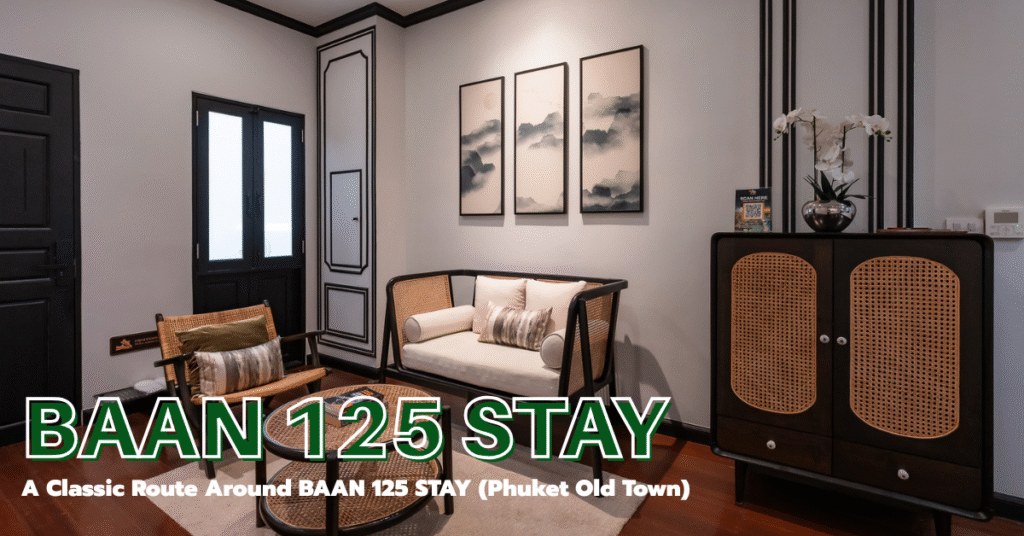
This accommodation is not just a standard hotel; it is a meticulously restored historic 3-story shophouse that deeply respects its original architecture. What makes BAAN 125 STAY truly unique is the preservation of the “Chimchae” (air wells or open courtyards) that plunge from the roof straight down to the ground floor. In fact, this building features three of these air wells! In the past, Phuket locals designed the Chimchae to improve natural ventilation, bring in natural sunlight, and act as a rainwater catchment system for household use.
Staying here allows you to absorb the authentic atmosphere of a true Phuket native. The ground floor operates as a cozy cafe, and the moment you step out of the front door, you are instantly on Thalang Road. There’s no need to hail a ride or walk far, making it effortlessly easy to wake up and embrace the town’s beauty at 6:30 AM.
Morning Walk Preparation
To ensure your morning stroll is absolutely perfect, here are a few preparation tips:
-
The Ideal Time: 6:30 AM – 8:30 AM. This is when the sun is just rising. The angled light creates beautiful dimensions for architectural photography, and it’s the time when locals come out to offer alms to monks and shop at the morning markets.
-
What to Wear: Breathable cotton clothing and comfortable sneakers or walking sandals, as we will be walking a loop of about 1.5 – 2 kilometers.
-
Gear: Your trusty camera or smartphone. Don’t forget to carry a little cash for buying local street breakfast or snacks along the way.
The Morning Walk Route Around BAAN 125 STAY
This recommended route is designed as a comfortable loop where you can stroll, take photos, soak in the vibe, and grab a bite to eat before looping right back to relax at BAAN 125 STAY.
Stop 1: Feel the First Breath of “Thalang Road”
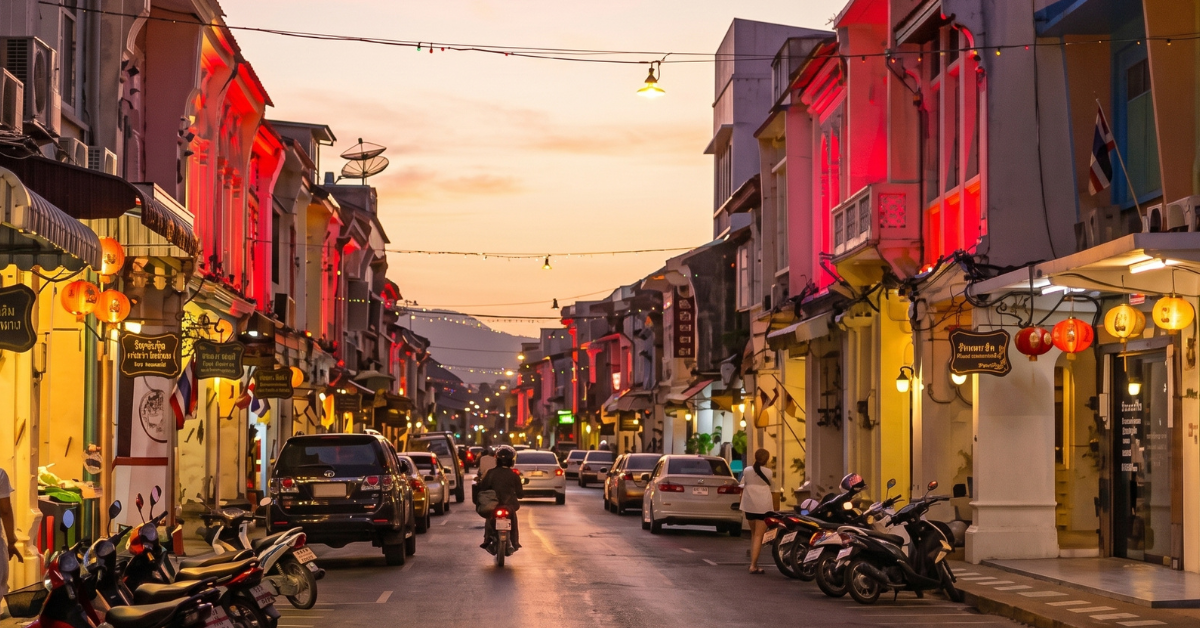
As soon as you step out of BAAN 125 STAY, the first thing you’ll notice is the serene quietness of a traffic-free Thalang Road. This street is like a living museum. Walk along the “Ngo-Kha-Ki” (Five-foot way), the covered walkways beneath the arches of the shophouses.
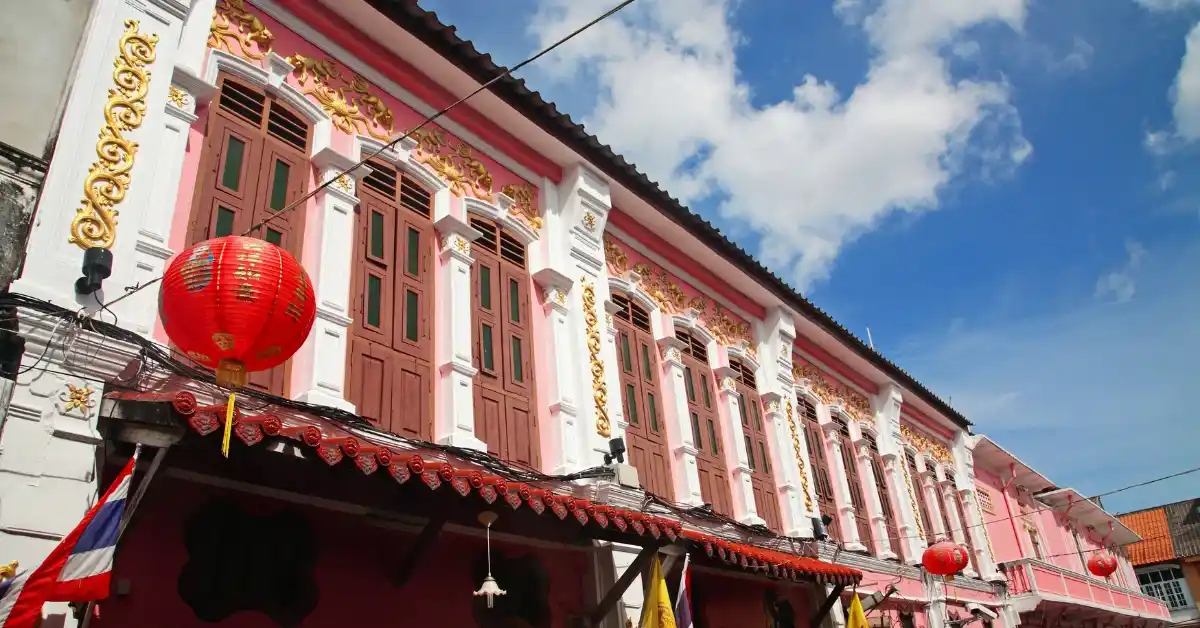
The Ngo-Kha-Ki is an architectural innovation designed to shield pedestrians from both the sun and the rain. In the early morning, you will see sunlight filtering through the wooden folding doors, reflecting off the pastel-colored buildings—pink, mustard yellow, and soft baby blue. It’s the absolute best time for street photography without the crowds. You might even spot elderly locals opening their doors to sweep the storefronts or water their plants—a charming sight you simply won’t see during the day.
Stop 2: The Pink Romance of “Soi Rommanee”
Walking just a few dozen meters west from the hotel, you will find a small intersection on your right. This is “Soi Rommanee,” widely hailed as one of the most beautiful alleys in Phuket. During the booming tin mining era, this alley was a red-light district and an entertainment hub. Today, it has been transformed into a classic street where buildings on both sides are painted in vibrant pinks and vivid colors.
Visiting Soi Rommanee at 7:00 AM means you will have the entire street to yourself to take photos with the pink facades freely. If you are a coffee lover, the alley is home to DouBrew Coffee, a specialty coffee shop that opens at 8:00 AM, offering roasted beans and craft chocolate from Nakhon Si Thammarat—an excellent pit stop for a morning caffeine boost.
Stop 3: Morning Light and Merit-Making at “Wat Mongkol Nimit”
Walking through Soi Rommanee to Dibuk Road, cross to the opposite side to find “Wat Mongkol Nimit,” the only royal temple in the Old Town area (just over 200 meters from your stay).
In the morning, monks walk this route to collect alms. Seeing the Sino-European buildings serving as a backdrop to the traditional Thai Buddhist way of life is a stunning, seamless cultural contrast. If you wish to make merit, you can purchase food from nearby vendors to join in and preserve this local tradition.
Stop 4: Turn into Phang Nga Road for the “Shrine of the Serene Light” and Street Art
Next, navigate your way down Yaowarat Road and take a left onto Phang Nga Road. This street is livelier and deeply infused with Hokkien Chinese culture. A must-see highlight is the Shrine of the Serene Light (Teng Kong Tong), an ancient shrine hidden down a narrow alley. The entrance might look small, but once you reach the end, you’ll discover an ancient Hokkien-style Chinese shrine featuring a roof adorned with colorful terracotta figurines. In the morning, the fragrant incense and the tranquil silence of the shrine offer a deeply meditative and positive energy.
Nearby on Phang Nga Road, you can also hunt for the famous Street Art by artist Alex Face (the little bird-child in a fluffy suit) hidden on the building walls. The morning light keeps the colors vibrant and prevents harsh shadows in your photos.
Stop 5: Check-in at the “Clock Tower” and “Chartered Bank”
Keep walking straight until you reach the intersection of Phang Nga Road and Phuket Road. Here, you will find a major city landmark: the Clock Tower, and just opposite is the Chartered Bank Building, a stunning mustard-yellow Neoclassical building that was once Phuket’s first foreign bank (now the Peranakan Nitat Museum). Traffic is still light at this intersection in the morning, allowing you to find wide angles to capture this majestic Western architecture standing tall against the blue sky.
Local Breakfast Guide
“If you come to Phuket and don’t eat a local breakfast, you haven’t truly arrived.” Phuket’s food culture is a unique blend of Hokkien Chinese, Muslim, and Southern Thai influences. Your morning walk will certainly work up an appetite, so here are a few local breakfast spots easily walkable from BAAN 125 STAY:
-
Aroon Po Chana: Located right on Thalang Road, just a few steps from your stay. This Muslim restaurant opens at 6:00 AM. A must-try menu item is the “Beef Curry with Roti”—soft, chewy roti bread served with a rich, flavorful curry. They also serve Murtabak and Chicken Biryani, which you should wash down with a sweet, creamy “Teh Tarik” (pulled tea) to fully wake you up.
-
Phuket Pork Porridge / Mee Sua Nam: Located near the Thalang Road intersection. If you want a comforting, hot soup for breakfast, order the “Mee Sua Nam.” This is a local dish featuring soft, slightly chewy Mee Sua noodles in a sweet and mellow pork bone broth with minced pork, offal, and fish. It’s the perfect warm meal to start the day.
-
Dim Sum & Kopi Culture: While famous dim sum restaurants like Super Dim Sum or Boonrat Dim Sum might require a slightly longer walk toward Phang Nga Road or the Suriyadate Fountain Circle, the walk is highly rewarding. Eating dim sum in Phuket (known locally as “Siao Boey”) involves small plates served with a unique, tangy local sauce and “Kopi” (traditional coffee). The morning atmosphere in a dim sum shop is the ultimate local gathering and social hub.
Trivia: Sino-Portuguese Architectural Insight
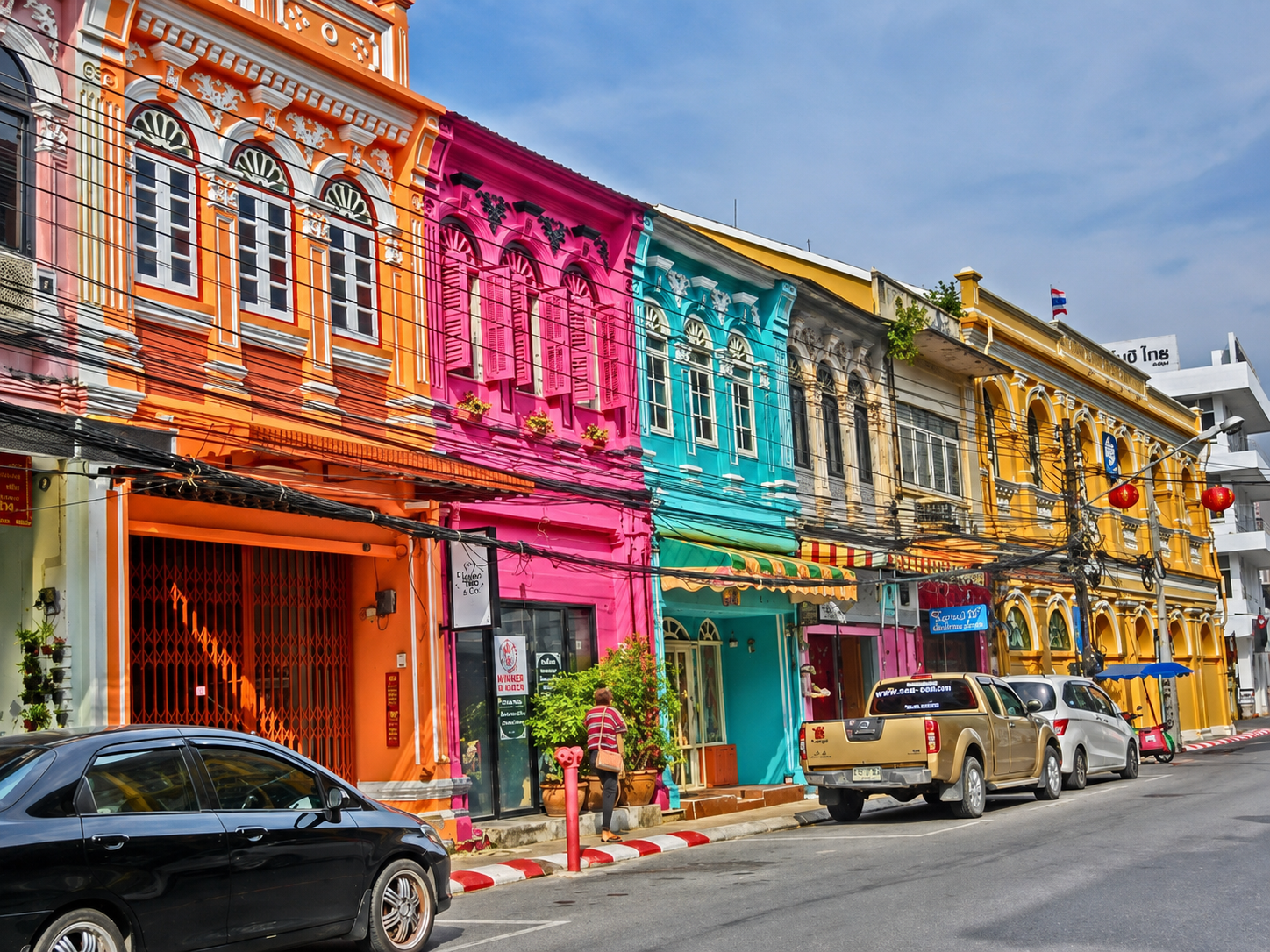
Your walk will be much more meaningful if you understand the history of what stands before you. The architectural style you see along the route around BAAN 125 STAY is known as Sino-Portuguese, or sometimes referred to by scholars as Sino-Colonial architecture.
It originated during the golden age of tin mining (around the late 19th to early 20th century). When Hokkien Chinese immigrants from Penang and Singapore arrived to mine and trade, they amassed great wealth and built homes that reflected their status. They seamlessly blended European structural engineering (influenced by the Portuguese and British colonists in the Malay Peninsula) with Chinese art and beliefs.
Details to look out for on your walk:
-
Stucco: Above windows and along doorways, you will often find stucco moldings of flowers and auspicious animals (like bats, Qilin/Kirin, and cranes), which are Chinese symbols of wealth and longevity.
-
Doors and Windows: The front doors are typically heavy, traditional Chinese wooden doors decorated with auspicious Chinese couplets. The second-floor windows are usually European-style wooden louvers that keep the rain out while letting the breeze in.
-
Floor Tiles: Along the Ngo-Kha-Ki walkways of many houses, you can still find vintage tiles imported from Europe or Penang. The intricate, colorful geometric patterns make for fantastic, chic photo backdrops.
Responsible Tourism in the Old Town
A morning walk isn’t just about personal leisure; it’s also about learning to respect the space so this historic district remains beautiful sustainably.
-
Keep the noise down: In the early hours, many houses still have elderly residents and locals sleeping. Walking quietly helps preserve the community’s peaceful charm.
-
Support local businesses: Buying local snacks, breakfast, or coffee from small roadside vendors directly funnels income into the community.
-
Keep it clean: Carry a reusable water bottle and always dispose of your trash in designated bins to keep the streets and Ngo-Kha-Ki walkways pristine.
FAQ
Q: Is it safe to walk around Phuket Old Town in the early morning?
A: It is very safe. Phuket Old Town is a residential neighborhood where locals wake up early to go about their daily routines. The streets are well-lit, and the locals are friendly and highly welcoming to tourists.
Q: Does BAAN 125 STAY provide parking?
A: The hotel is located on Thalang Road and does not have private parking, but guests can park on nearby public streets. Staying here is actually perfect for a car-free experience, as major attractions and breakfast spots are all within easy walking distance.
Q: What is the best day of the week to stay at BAAN 125 STAY?
A: If you check in on a Saturday night, you will wake up to the tranquility of Sunday morning. Then, on Sunday evening, Thalang Road right in front of the hotel closes to traffic and transforms into “Lard Yai” (the Sunday Night Market), Phuket’s most famous walking street. You can literally walk out of your room and straight into the market!
Summary
Choosing to stay at BAAN 125 STAY is more than just finding a bed for the night; it’s securing a front-row ticket to experience the true “soul” of Phuket. Waking up just a little bit earlier, stepping out of your meticulously decorated room, and walking onto Thalang Road bathed in the day’s first light will be an invaluable experience that completely shifts your previous perceptions of Phuket.
The morning walking route around the property—from Soi Rommanee and the Shrine of the Serene Light to the Clock Tower, all capped off with a local breakfast of beef curry roti or hot Mee Sua—will create memories that make you fall in love with Phuket Old Town time and time again. If you are planning a trip to Phuket, don’t forget to set aside time for the “early morning,” and let your own two feet get to know this city at a much slower, more beautiful pace.